







One person clicks the wrong link, enters a password into a fake Microsoft 365 page, and what looked like a normal Tuesday turns into a business interruption. Orders stall, inboxes are locked, customers start calling, and your team loses hours cleaning up a problem that started with a split-second decision.
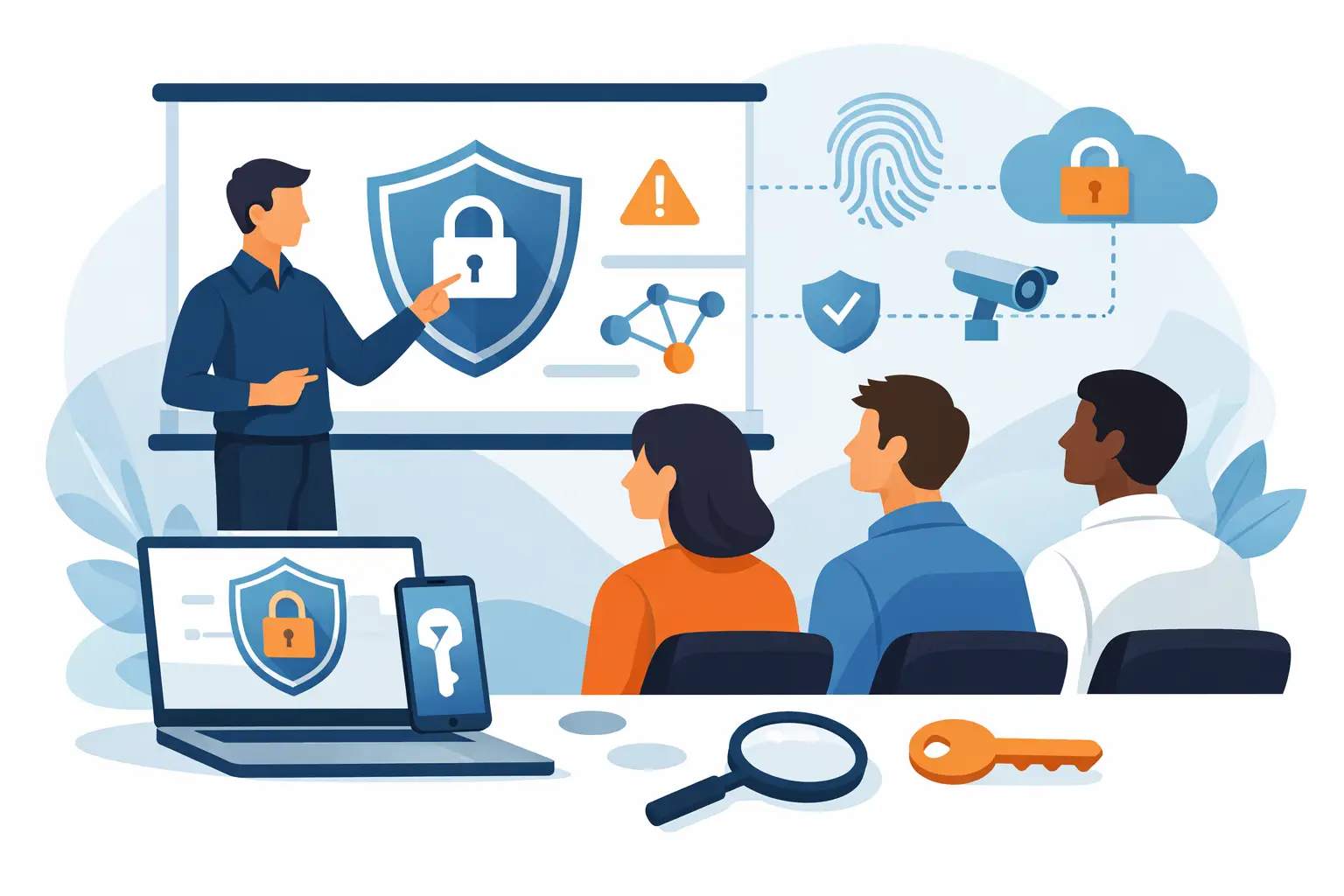
That is why cyber security awareness training for staff matters. Not as a compliance exercise, and not as a once-a-year slideshow everyone forgets by Friday, but as a practical control that reduces risk in the real world.
For small and mid-sized businesses, that distinction matters. Larger organisations may have bigger internal security teams and more room for error. Most SMEs do not. If your operation depends on email, cloud systems, payments, phones, remote access or shared files, one mistake can affect the whole business quickly.
What cyber security awareness training for staff should actually do
Good training changes behaviour. That sounds obvious, but many programmes are still built around policy recitals and generic warnings rather than the situations staff face every week.
A useful programme teaches people how to spot suspicious emails, fake login pages, invoice fraud, password reuse, unsafe file sharing and social engineering over the phone. It should also make staff confident about what to do next – who to tell, how to report it, and when to stop and ask.
That last part is often missed. Many incidents get worse because staff worry about looking foolish, so they stay quiet for too long. Training should lower that barrier. If someone reports a mistake early, your business has a far better chance of containing it.
Why annual training is rarely enough
Threats change too quickly for a yearly session to carry the load. Attackers adjust their wording, copy real brands more convincingly, and target busy teams when they are distracted. Finance staff see payment scams. Retail teams may deal with point-of-sale and supplier fraud. Managers are targeted with impersonation attempts. Remote workers face home network and device risks.
That means awareness has to be continuous. Short, regular training is usually more effective than a long session once a year. People remember what they practise. They also respond better when the material reflects the tools they use and the pressure they work under.
There is a balance to strike, though. Too much training becomes background noise. Too little leaves gaps. For most businesses, the right model is a steady rhythm – concise learning, relevant examples, and regular testing without creating fatigue.
The biggest risks staff need to recognise
Most businesses do not need staff to become security specialists. They need them to spot the common warning signs before damage is done.
Phishing remains the obvious one, but it is no longer limited to badly written emails asking for bank details. Many messages now look polished and plausible. Some imitate parcel companies, suppliers, banks or internal colleagues. Others aim to steal credentials by sending users to fake login pages that look almost identical to the real thing.
Business email compromise is another serious risk. This is where an attacker pretends to be a manager, supplier or customer and asks for payment details to be changed, invoices to be settled urgently, or sensitive data to be shared. In busy teams, especially those handling finance, payroll or customer records, these messages can slip through if staff are trained only to look for obvious scams.
We've got your back
Then there is password behaviour. Staff still reuse passwords across systems, share them informally, or store them in insecure ways when processes are awkward. Awareness training helps, but only if it is paired with sensible tools such as password managers and multi-factor authentication. Training on its own cannot compensate for poor system design.
Training works best when it matches the business
A retailer with multiple sites needs different examples from a professional services firm. A finance team needs more depth on invoice fraud than a warehouse team. Staff using shared devices need guidance that fits that environment. If your business has a mix of office workers, mobile staff and frontline teams, one generic module will only go so far.
That is why the most effective programmes are tailored. They reflect the systems your people use, the scams they are likely to see, and the reporting process your business expects them to follow. Relevance makes training easier to remember and easier to act on.
This is also where a single accountable technology partner can make a difference. When awareness training sits alongside email security, password management, endpoint protection and monitored response, your people are not being asked to carry the full burden alone. They become one part of a joined-up defence rather than the last line standing.
How to measure whether staff training is working
Completion rates are not enough. They tell you who sat through a module, not whether your business is safer.
A better starting point is phishing simulation results over time. Are fewer people clicking? Are more people reporting suspicious messages? Are higher-risk teams improving? The aim is not to catch people out. It is to identify where habits need work and where extra support is required.
You should also look at reporting behaviour. If staff are escalating suspicious emails, login prompts and payment requests more quickly, that is progress. Speed matters in cyber incidents. Early reporting can be the difference between deleting a malicious email and recovering from a wider compromise.
It also helps to track outcomes after training. Has password hygiene improved? Are staff using approved tools more consistently? Have invoice verification steps become part of normal process? Good awareness training should show up in day-to-day behaviour, not just in LMS dashboards.
Where businesses often get it wrong
The most common mistake is treating training as a tick-box requirement. People notice when content is generic, outdated or clearly there for audit purposes rather than practical use. When that happens, engagement drops and the message is lost.
Another issue is blaming staff without fixing the environment around them. If processes are clumsy, approvals are rushed, and systems generate confusing prompts, people will make mistakes. Training should support staff, not shift responsibility away from leadership, IT and process design.
There is also a temptation to make simulations overly punitive. A realistic test can be useful. A gotcha culture is not. If staff feel embarrassed or singled out, reporting drops. The healthier approach is coaching, reinforcement and clear support.
Building a training programme that sticks
Start with the highest-risk behaviours in your business. For many organisations that means phishing, password hygiene, payment verification, safe use of cloud services and clear incident reporting. Keep the content short enough that busy teams will absorb it, but specific enough that it feels relevant.
Then build repetition into the programme. Monthly or quarterly learning, reinforced by simulated phishing and simple reminders, tends to be more effective than a single annual event. Managers should be part of it too. If leaders bypass process, staff will follow their example.
It also pays to align training with the rest of your controls. If you roll out multi-factor authentication, explain why. If you introduce a password manager, show people how to use it properly. If staff are expected to verify bank detail changes by phone, make that process clear and easy.
For businesses that want fewer moving parts, this is often easier with one provider coordinating the pieces. Vetta helps businesses connect awareness training with the wider security stack, so staff education is backed by practical controls, monitoring and support that work together.
Cyber security awareness training for staff is not a silver bullet
It reduces risk, but it does not remove it. Well-trained people can still be tricked, especially when attackers use urgency, authority and convincing brand impersonation. That is why training should sit alongside filtered email, secure identity controls, backups, endpoint protection and a plan for responding when something goes wrong.
Still, dismissing training because it cannot stop everything misses the point. The goal is not perfection. The goal is fewer clicks, faster reporting, better decisions and less chance that a routine working day turns into expensive downtime.
If your staff know what to look for, know what to do next, and know they will be supported when they raise a concern, your business is already in a stronger position. Technology should make life easier, and that includes security. The best training gives people confidence without adding complexity.





