







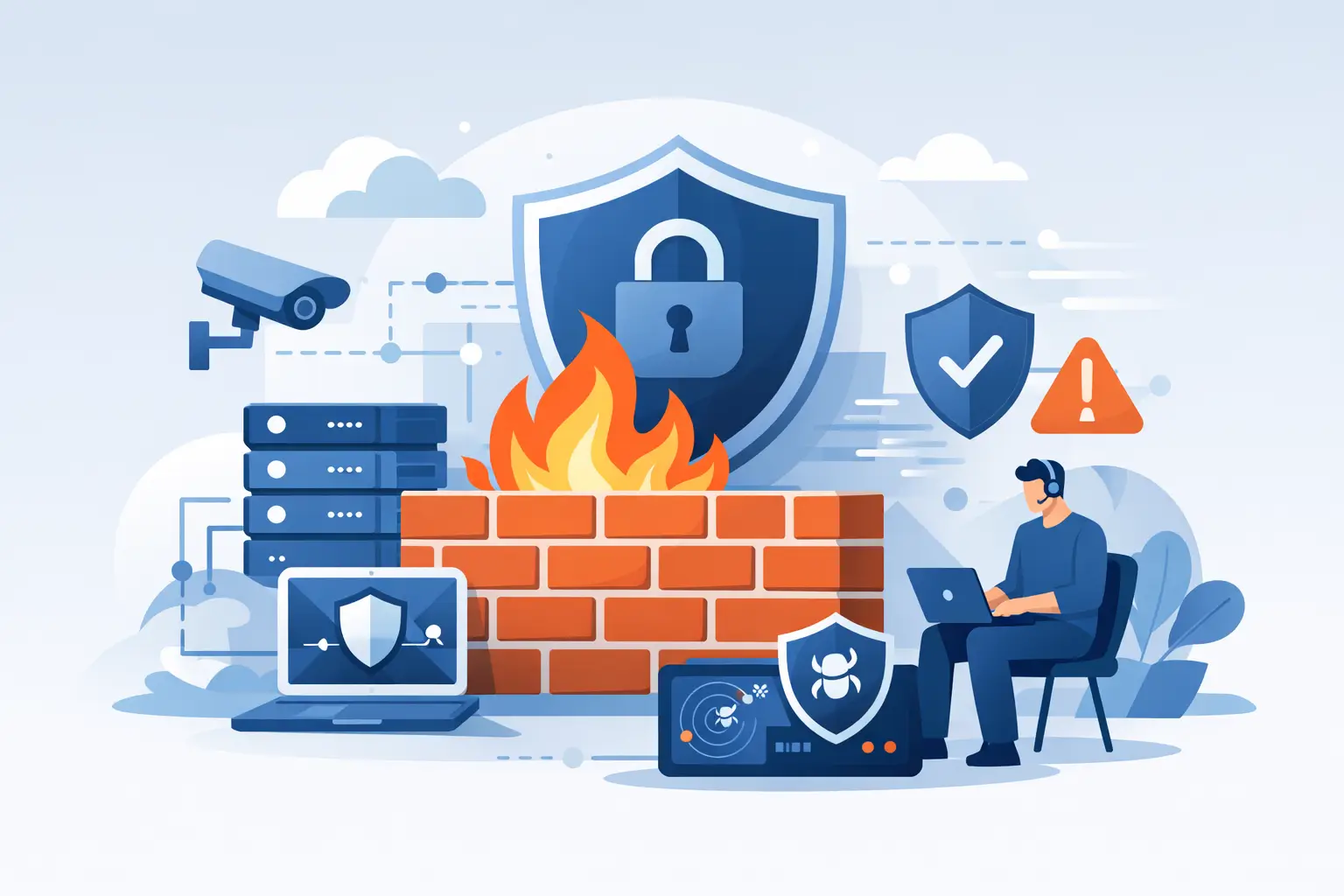
A firewall only helps when somebody is actually looking after it. That is where many businesses get caught out. They buy the appliance, tick the security box, and assume they are covered. Then a rule is left too open, alerts go unread, or a failed update creates a gap nobody spots until there is a problem. If you are asking what does a managed firewall do, the short answer is this: it puts a skilled team behind your firewall so it is configured properly, monitored continuously, and adjusted as your business changes.
For busy SMEs, retailers, and multi-site operators, that matters because security is rarely just about one device. Your broadband, WiFi, payment systems, cloud apps, remote access, and staff devices all depend on the network behaving as expected. A managed firewall helps control that traffic, reduce risk, and keep your operation stable without leaving your internal team to watch dashboards around the clock.
What does a managed firewall do in practice?
At a basic level, a firewall sits between your internal network and the wider internet, inspecting traffic and deciding what should be allowed through. A managed firewall service adds the operational layer around that technology. Instead of simply installing the firewall and handing it over, the provider takes responsibility for keeping it effective.
That usually starts with configuration. Rules need to reflect how your business actually works. A retail site may need payment traffic prioritised and segmented from guest WiFi. A professional services firm may need secure remote access for staff working from home. A warehouse may rely on cloud systems, scanners, and VoIP all day, so poor firewall settings can affect performance as much as security.
From there, management becomes an ongoing job. Threats change, software needs patching, new services get introduced, and old rules should be removed when they are no longer needed. A managed firewall service keeps that tidy and current. It also means alerts are reviewed by people who know what they are looking at, rather than sitting in an inbox until someone gets time to check them.
It blocks threats, but that is not the whole job
Many people think a firewall simply blocks bad traffic. It does that, but a managed firewall is also there to control legitimate traffic in a sensible way. Good security is not about shutting everything down. It is about allowing the right access for the right people and systems, while limiting exposure everywhere else.
That can include filtering malicious traffic, detecting suspicious connection attempts, limiting access to sensitive systems, supporting secure site-to-site links, and helping separate business-critical devices from general user traffic. In practical terms, that means your EFTPOS environment does not sit loosely beside guest devices, and your office network is not left open in ways that create avoidable risk.
The managed part is what makes the difference. Firewalls generate a lot of noise. Not every alert is urgent, and not every blocked connection is an attack. Someone has to separate the routine from the risky, investigate unusual activity, and make changes without disrupting the business. That is where experience counts.
Why businesses choose managed rather than DIY
In-house firewall management can work well if you have the right people, enough time, and proper cover when they are away. Many smaller businesses do not. Even businesses with internal IT often prefer managed firewall support because firewall administration is specialised, continuous work. It is not a task you want squeezed between printer issues, onboarding, and software support.
Managed service gives you consistency. Policies are reviewed, firmware is updated, logs are monitored, and incidents are escalated. That lowers the chance of a firewall becoming a forgotten box in a comms cupboard.
It also helps with accountability. If connectivity, security, and support sit with different suppliers, issues can bounce around while each provider points elsewhere. A managed model works best when the provider can see the whole picture and own the outcome. When your network, security, and support are coordinated properly, problems tend to get resolved faster because the handoffs disappear.
What a managed firewall should include
Not every managed firewall service is the same, so it is worth understanding what you are actually getting. Some providers mainly offer device rental with light-touch support. Others take a more active role and provide genuine management.
We've got your back
A proper service should include initial design and deployment, rule management, software and firmware updates, continuous monitoring, alert handling, reporting, and support when changes are needed. It should also include regular review. Businesses change quickly. New branches open, cloud services get adopted, teams work remotely, and temporary access exceptions have a habit of becoming permanent unless somebody tidies them up.
Reporting matters too, but only if it is useful. A good provider should be able to explain what is happening on your network in plain language. That includes what has been blocked, what trends are worth noticing, and whether anything needs attention from your side. The point is not to drown you in technical detail. The point is to give you confidence that someone is watching, acting, and keeping the environment under control.
Where managed firewalls fit into wider security
A managed firewall is important, but it is not a complete security strategy on its own. It protects the network edge and can enforce internal segmentation, but it does not replace endpoint protection, email security, backups, password controls, security awareness training, or wider monitoring.
That matters because attacks do not only come through one front door. A phishing email can still reach a user. A weak password can still be abused. A laptop used outside the office can still be compromised. The firewall plays a central role, but it works best as part of a joined-up security approach.
For that reason, the most effective managed firewall services sit within a broader managed environment. If the team looking after your firewall also understands your connectivity, cloud setup, devices, and support model, they can make better decisions and respond more quickly. That joined-up visibility is often where businesses see the biggest operational benefit.
Trade-offs and things to ask before you buy
Managed does not mean identical for every business. The right setup depends on your size, number of sites, compliance needs, remote access requirements, and tolerance for risk. A single-office business with a small team will not need the same design as a retailer with multiple sites and payment systems.
There are also trade-offs. Tighter policies can improve security, but if they are poorly designed they can frustrate users or interrupt legitimate services. Broader access may feel convenient, but it can increase risk. That is why rule design and ongoing review matter so much. The goal is not maximum restriction. It is sensible control that supports how the business operates.
Before choosing a provider, ask how monitoring works, who responds to alerts, how changes are approved, what reporting you will receive, and whether support is available when your business is actually trading. If your operations run early, late, or across multiple locations, your security support should reflect that reality.
It is also worth asking how the provider handles the rest of the environment. If there is a connectivity issue, can they see it? If a branch cannot reach a cloud platform, can they determine whether the fault sits with the link, the firewall, or the application? That broader ownership often matters more than the specification sheet.
When a managed firewall makes the biggest difference
The businesses that gain the most tend to be the ones where downtime is expensive and internal IT time is limited. That includes retail, hospitality, healthcare, professional services, logistics, and growing multi-site operations. In those environments, even a small network issue can affect sales, customer service, or staff productivity very quickly.
A managed firewall helps by making security and network control somebody else’s responsibility in a practical, accountable way. Not in the sense of losing visibility, but in the sense of knowing there is a team monitoring, maintaining, and responding without waiting for a crisis.
For many organisations, that is the real answer to what does a managed firewall do. It does not just sit at the edge of the network blocking traffic. It gives your business active oversight, faster response, cleaner control over access, and less dependence on ad hoc fixes. Providers such as Vetta Group build that into a broader service model so connectivity, support, and security work together instead of being managed in silos.
Technology should make life easier, not create one more thing your team has to worry about. If your firewall is critical to keeping the business online and protected, it makes sense to have people behind it who treat that responsibility as an ongoing service, not a one-off installation.





