







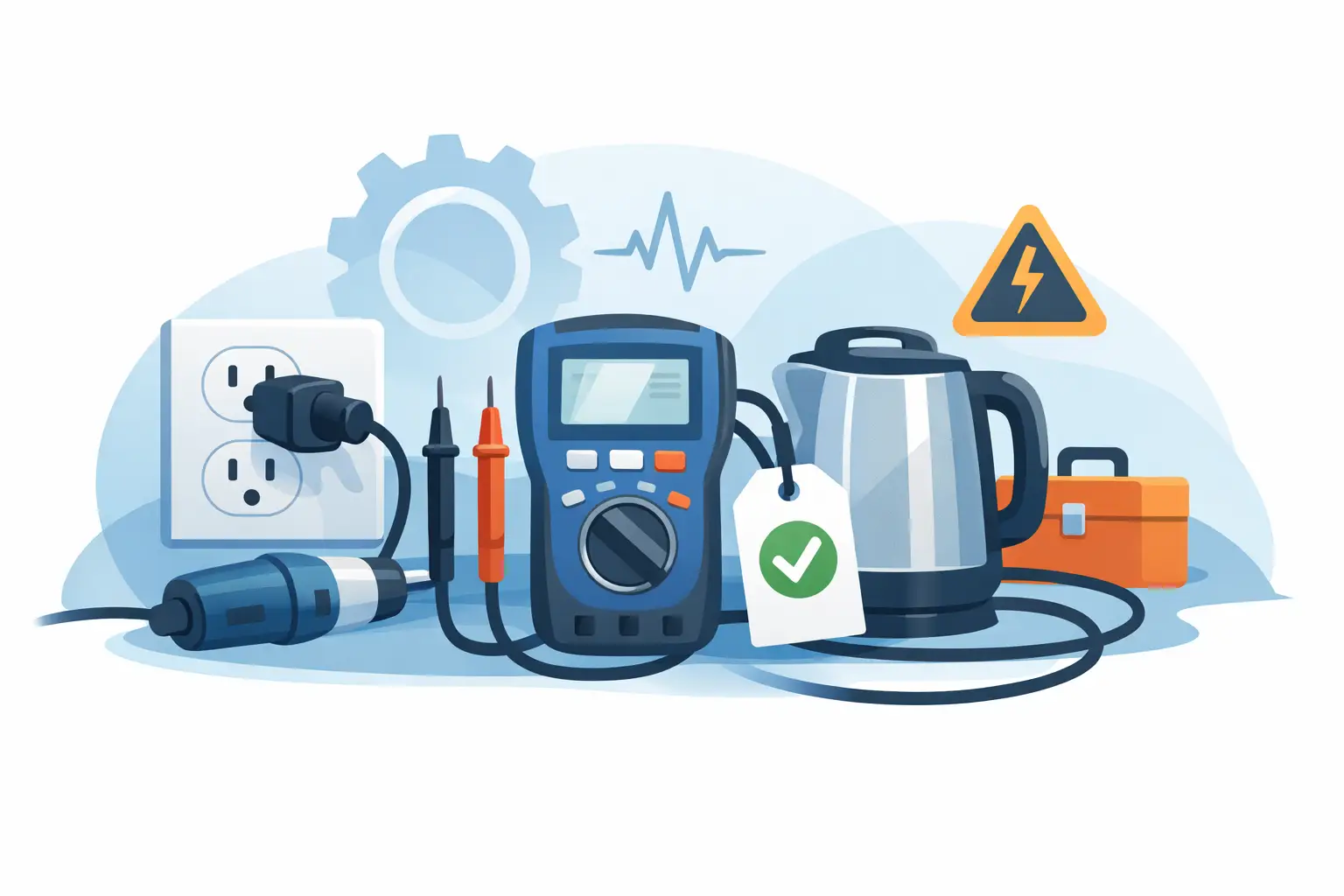
A failed kettle in the staff room is annoying. A damaged power lead behind a till, in a workshop, or at a reception desk is a different problem altogether. Electrical test and tag is one of those routine controls that rarely gets attention when it is done well, but it matters the moment something goes wrong.
For busy businesses, the real value is not the sticker on the plug. It is the confidence that portable electrical equipment has been checked properly, unsafe items have been taken out of service, and there is a clear record to support a safer workplace. If you run a retail site, office, café, warehouse, clinic, or multi-site operation, that practical discipline can prevent disruption as much as it supports compliance.
What electrical test and tag actually means
Electrical test and tag is the process of inspecting portable electrical appliances and equipment to confirm they are safe to use. That usually starts with a visual inspection, because many faults are obvious once someone qualified looks closely. Cracked plugs, frayed leads, damaged casings, bent pins and signs of overheating are common examples.
Testing then goes further, using specialist equipment to check things such as earth continuity, insulation resistance and polarity where relevant. Once an item passes, it is tagged to show the test date, the next due date, and who carried out the work. If it fails, it should be removed from use until it is repaired or replaced.
This applies to more than the obvious items. Yes, kettles, monitors, extension leads and power boards are included, but so are chargers, portable tools, point of sale equipment, floor cleaners and plenty of other day-to-day devices that move around a site or get used heavily.
Why businesses take electrical test and tag seriously
At a practical level, this is about reducing the risk of electric shock, burns and electrical fire. Those are not theoretical risks. Portable equipment is handled, moved, plugged in and unplugged constantly. Cables get trapped under furniture, leads are yanked from sockets, and devices are used in areas with moisture, dust or heat.
The other side is operational. When electrical safety is not managed consistently, faults are often picked up only after a near miss, a breakdown or a complaint. That creates avoidable downtime and puts managers on the back foot. A scheduled approach is far easier to control.
There is also the matter of duty of care. Employers are expected to provide a safe working environment. Electrical safety forms part of that responsibility, and test and tag can help demonstrate that reasonable steps have been taken. It is not the whole safety picture, but it is a visible and measurable part of it.
Is electrical test and tag a legal requirement?
This is where some confusion creeps in. In many workplaces, people talk about test and tag as though it is mandatory for every appliance in every setting. The reality is more nuanced.
The legal requirement is to keep electrical equipment safe. Test and tag is one recognised way to help meet that obligation, particularly for portable appliances in workplaces. Whether it is necessary, and how often it should happen, depends on the environment, the type of equipment, how it is used and the level of risk.
A quiet back-office with low-risk equipment is different from a building site, commercial kitchen or workshop. Equipment that is rarely moved may not need the same testing interval as tools and leads used daily in harsher conditions. That is why a blanket approach can be inefficient. Over-testing creates cost and disruption. Under-testing creates risk.
A sensible programme should reflect the site, the assets on it and the exposure those assets have to damage.
We've got your back
How often should electrical test and tag be done?
There is no single schedule that suits every business. The right interval depends on your working environment and the kind of equipment involved.
In higher-risk settings, testing may be needed more frequently because equipment is exposed to rough handling, dust, moisture or constant movement. In lower-risk offices, intervals are often longer, especially where equipment stays in place and there is little chance of wear or damage between inspections.
This is why asset visibility matters. If you do not know what equipment you have, where it is located and how it is used, it is difficult to set a testing schedule that is both practical and defensible. For multi-site businesses, consistency matters just as much. One site manager might be highly disciplined, while another is relying on memory and old labels.
What happens during an electrical test and tag visit
A proper visit should feel organised, not disruptive. Equipment is identified, inspected and tested methodically, with failed items clearly separated from those safe to remain in service.
The visual inspection is often the stage that catches the most issues. A competent technician will look for wear, damage, poor repairs, unsuitable use and anything else that could make the item unsafe. The instrument testing then confirms whether the appliance meets the required electrical safety checks for its class and type.
Once complete, each passing item is tagged and logged. That record matters. It gives you traceability, helps with future scheduling and provides evidence that checks have been carried out. Failed items should be documented clearly, along with the action required.
Good providers also work around your operation. For example, they can test outside trading peaks, coordinate across multiple sites and minimise disruption for staff and customers. That matters when uptime is a business issue, not just a convenience.
Common mistakes with test and tag
The biggest mistake is treating it as a box-ticking exercise. If the only outcome is a coloured tag on a plug, the business has missed the point.
Another common issue is incomplete coverage. Portable appliances are easy to overlook, especially when they have been brought in by staff, moved between departments or added during a fit-out. Chargers, extension leads and power boards are often under-managed despite seeing heavy daily use.
There is also a tendency to rely on outdated tags without checking whether the testing programme still reflects the risk. Offices change. Equipment changes. Sites expand. What was adequate two years ago may not be adequate now.
Finally, some businesses separate electrical safety from their wider operational planning. In reality, these things are connected. If your sites depend on point of sale devices, networking equipment, displays, handheld tools or customer-facing terminals, electrical faults are not just a safety issue. They interrupt service and revenue.
Choosing the right approach for your business
The best approach is one that is proportionate, documented and easy to maintain. For a small single-site office, that may be straightforward. For a retailer with multiple branches, or any business juggling connectivity, devices, security and field support, coordination becomes more valuable.
This is where having one accountable partner can make life easier. Instead of dealing with separate suppliers for electrical checks, onsite support, device rollout and operational troubleshooting, you get a clearer line of responsibility. That does not change the technical requirements of test and tag, but it does improve execution.
For example, if you already depend on onsite support for business technology, it often makes sense to align safety checks with broader field service visits. That reduces disruption, simplifies scheduling and gives operations managers better oversight. It is a practical way to keep sites safe and productive without adding more admin.
Vetta takes that broader view because businesses do not experience problems in neat categories. A damaged power board under a counter, a failing EFTPOS terminal and a connectivity issue at the same site all affect the same outcome – the ability to keep trading.
Electrical test and tag is part of a bigger risk picture
It is worth being clear about one thing. Electrical test and tag is useful, but it is not a substitute for good workplace practice.
Staff should still know how to spot obvious damage and report it quickly. Unsafe equipment should not stay in service until the next scheduled visit. New equipment should be introduced properly. Old or repaired devices should be checked before being put back into use where appropriate. And if the environment itself creates risks, such as moisture, overloading or poor cable management, those issues need attention too.
The strongest safety outcomes usually come from combining routine testing with sensible site standards and clear ownership. That means somebody knows what equipment is in use, who is responsible for it, and what happens when a fault is found.
For most businesses, that is the difference between a compliance task and a reliable operating process.
When electrical test and tag is done properly, it is not just about passing an inspection. It is about removing uncertainty from the workplace so your people can get on with the job, your sites can keep running, and small faults do not turn into larger problems.





