







A card terminal drops offline at the Saturday rush. Staff can still take cash, but queues build, the stock system lags, and the guest WiFi is somehow still working. That is often the moment retailers realise their network has grown into one shared environment where everything depends on everything else. This guide to network segmentation for retailers is about fixing that before it costs sales, time, and trust.
For most shops, network segmentation is not a nice-to-have security project. It is a practical way to keep payment systems protected, separate customer traffic from business operations, and limit the impact when something goes wrong. If one part of the network is compromised or overloaded, the whole store should not go with it.
What network segmentation means in a retail setting
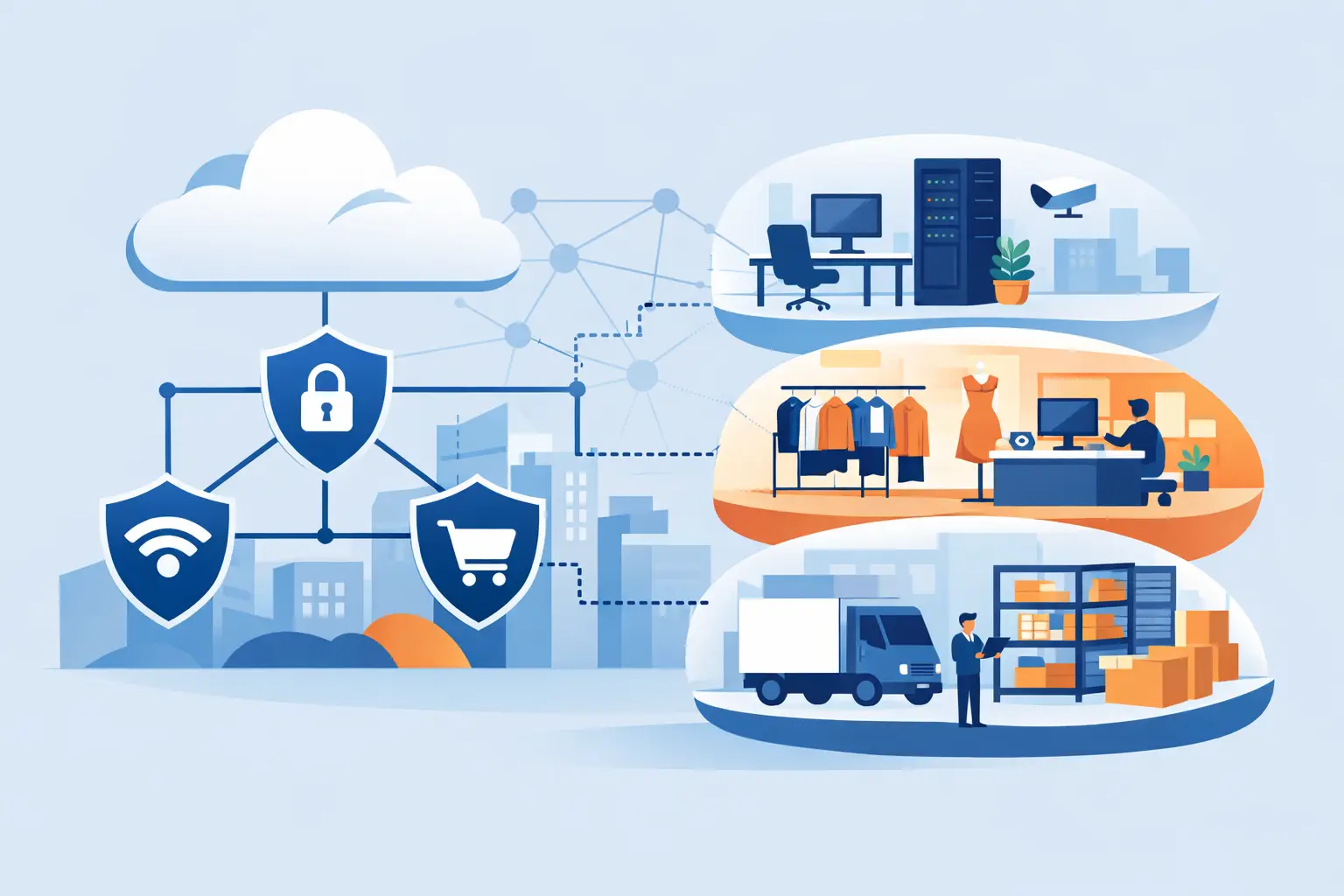
In plain terms, network segmentation means splitting your network into separate zones with rules controlling what can talk to what. Instead of putting tills, EFTPOS, CCTV, office laptops, scanners, printers, back-office systems, and guest WiFi on the same flat network, you create boundaries between them.
Those boundaries can be simple or quite detailed. A small independent retailer might separate payment devices, staff systems, and guest WiFi. A multi-site chain may also create distinct segments for CCTV, building services, inventory devices, head office access, third-party support, and temporary contractor connections.
The point is not complexity for its own sake. The point is control. When systems are grouped by purpose and risk, you can apply tighter security where it matters most and avoid unnecessary exposure elsewhere.
Why a guide to network segmentation for retailers matters now
Retail networks have changed. A shop is no longer just a till and a broadband line. It may include cloud POS, mobile payment devices, self-service kiosks, loyalty systems, smart TVs, digital signage, environmental sensors, and remote support tools. Each one adds convenience, but each one also creates another path into your environment.
Retailers also sit close to payment data, customer information, and high-pressure trading windows. That makes them attractive targets and leaves little room for downtime. Even if your systems are cloud-based, your local network still matters because it decides who can connect, what they can reach, and how far a problem can spread.
Segmentation helps in three direct ways. It reduces the chance that a compromised device can move laterally into payment or admin systems. It improves resilience by containing faults or traffic spikes. And it supports compliance efforts, especially where payment environments need tighter control and clearer scope.
The segments most retailers should consider
The right design depends on your estate, your applications, and whether you run one site or twenty. Still, there are a few segments that make sense for many retailers.
Payment and POS systems
This is usually the highest-priority segment. Card terminals, POS devices, payment gateways, and anything in scope for card processing should be tightly controlled. They do not need broad access to office devices or guest traffic, and in many cases they should only talk to approved payment services and the systems that genuinely support trading.
Guest WiFi
Guest WiFi should always be isolated from business operations. Customers expect internet access, but they should never be able to reach your tills, printers, cameras, or office machines. If guest usage spikes, that traffic also should not degrade core store services.
Staff and back-office devices
Laptops, tablets, desktops, and shared office equipment often need broader access than POS devices, but they still should not have unrestricted reach across the network. This segment often becomes the default landing place for email, browsing, reporting, and administration, which means it is exposed to common threats such as phishing and malware.
We've got your back
IoT and operational technology
CCTV, alarms, smart sensors, digital signage, and building systems are frequently overlooked. Many of these devices are harder to patch and easier to forget. They should sit in their own controlled segment rather than share space with business-critical systems.
Management and support access
If your IT team or provider needs remote administration, that access should be separate and tightly governed. Support connections are necessary, but they should be deliberate, monitored, and limited to the systems they are meant to manage.
How to plan segmentation without disrupting stores
The biggest mistake is treating segmentation as a diagram before it is an operational plan. Retailers need to start with how the business actually trades.
Begin by identifying critical systems. Ask what must work for the store to keep trading, what can tolerate interruption, and what data or services require the strongest protection. For many retailers, payment first, trading systems second, and guest or convenience services after that is the right order.
Then map the devices and traffic flows you already have. You need to know which systems speak to each other, which third parties require access, and which devices are no longer documented properly. This step often reveals awkward realities, such as a printer on the same subnet as payment devices or a CCTV recorder reachable from office PCs.
Once you know the flows, define your segments around function and trust level. Keep the design understandable. A simple, well-managed model is better than an elaborate one nobody maintains. If your team cannot explain why a segment exists and what it is allowed to reach, it is probably too messy.
After that, build rules based on least privilege. Allow what is needed for business operations and block the rest. This sounds obvious, but it is where a lot of projects drift. Teams are tempted to leave broad access in place because it is easier in the short term. That convenience usually becomes risk later.
Rollout also matters. For live retail environments, changes should be staged, tested, and monitored. Pilot in one store or one device group first. Confirm that POS, payment authorisation, inventory updates, remote support, and failover behaviour all work as expected before wider deployment.
Common mistakes in retail network segmentation
One of the most common errors is assuming a VLAN on its own is enough. Segmentation needs policy, not just labels. If every segment can still talk freely to every other segment, the boundary is mostly cosmetic.
Another problem is forgetting about third-party access. Payment vendors, POS support teams, CCTV installers, and software providers may all need some level of connectivity. If that access is not designed properly, exceptions pile up and weaken the whole model.
Retailers also run into trouble when they segment once and never revisit it. New devices appear, stores move, services shift to the cloud, and old firewall rules stay in place long after they make sense. Segmentation is part of operational hygiene, not a one-off exercise.
Bandwidth and resilience should not be ignored either. Separating traffic improves control, but if the underlying connectivity is fragile, you can still lose trade. Security design and network performance need to be considered together.
Security, compliance, and the real-world trade-offs
Segmentation can reduce PCI scope and improve your security posture, but it is not a silver bullet. Poor credentials, weak patching, and unmonitored endpoints can still create major exposure. The network should support a wider security model, not carry it alone.
There are also trade-offs. Tighter segmentation can mean more policy management, more change control, and more reliance on accurate documentation. For a small retailer with limited in-house IT, the answer is usually not more DIY complexity. It is a design that is sensible, supported, and monitored by people who understand both retail operations and security.
Multi-site retailers have another decision to make. Some controls are best standardised across every branch, while some store-specific exceptions are unavoidable. The trick is keeping those exceptions genuinely exceptional. Once each site becomes unique, support gets slower and risk gets harder to manage.
What good looks like day to day
A well-segmented retail network is usually quite boring, and that is the point. Guest users browse without touching store systems. Card payments are isolated and stable. Office devices can do their jobs without exposing tills. Cameras record in their own lane. Remote support is controlled and logged. When a device misbehaves, the issue is contained instead of rippling across the whole business.
It also makes troubleshooting easier. Clear boundaries help teams isolate faults quickly, whether the issue is a compromised laptop, a noisy IoT device, or a payment application that cannot reach its service. In busy retail operations, that speed matters.
For businesses that want one accountable partner across connectivity, IT, security, and payments, this is where integrated support makes a real difference. The network design, the firewall policy, the store rollout, and the ongoing monitoring all need to work together. If each layer sits with a different supplier, problems tend to bounce between queues while the store waits.
The best time to sort segmentation is before an audit finding, a payment issue, or an incident forces the decision. Retailers do not need a perfect architecture on day one, but they do need clear separation between critical systems and everything else. Start with the parts of the business that keep revenue moving, build sensible controls around them, and make sure someone owns the outcome after go-live.





