







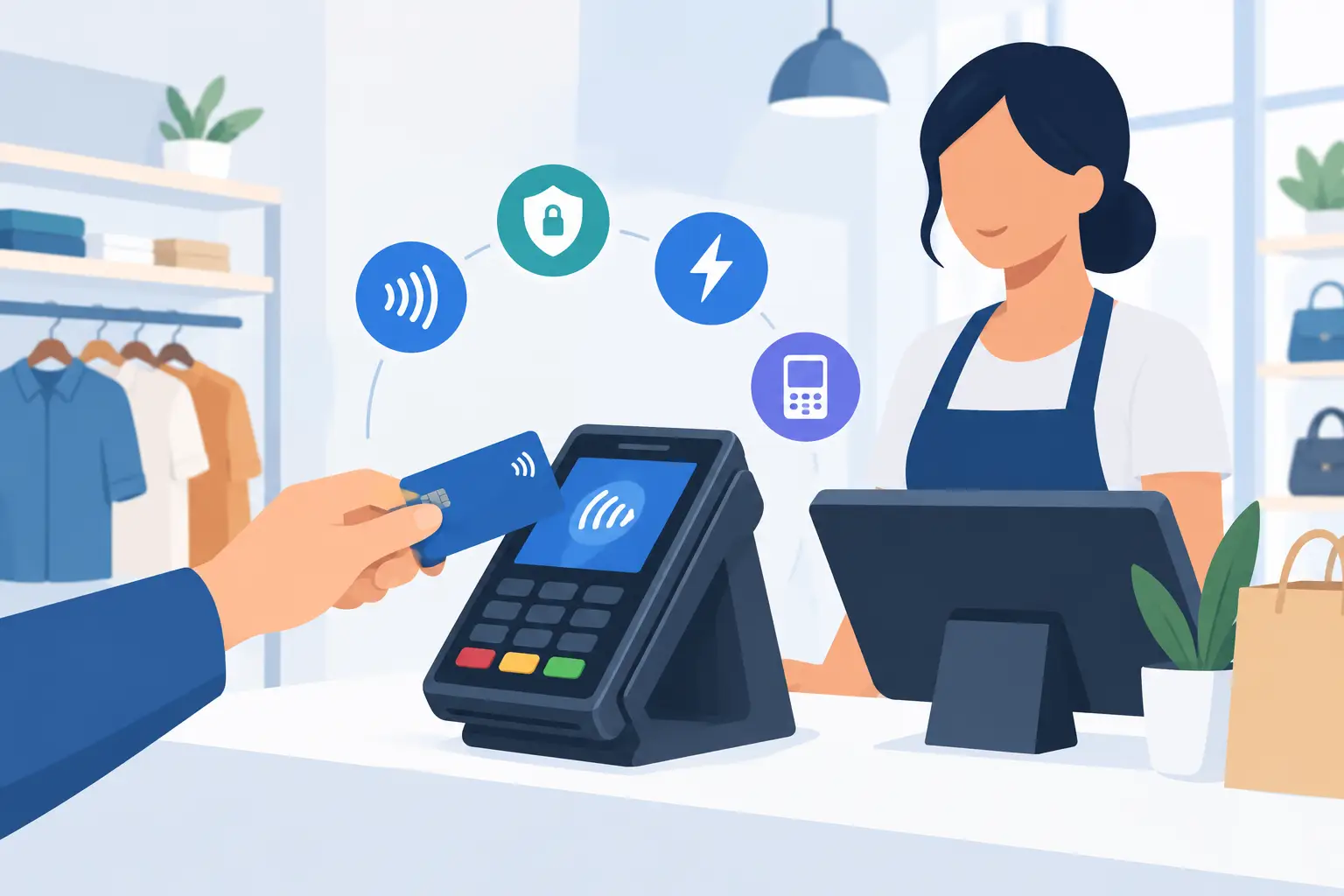
A queue forming at the counter is rarely just a queue. It can mean a customer who walks out, staff who feel pressured, and a sale that never lands. The best EFTPOS features retail businesses choose should remove that friction while giving owners confidence that payments, connectivity and support will hold up during the busiest parts of the day.
For a New Zealand retailer, an EFTPOS terminal is not simply a card reader. It is part of the trading environment: connected to the internet, tied to the point-of-sale system, handled by staff, and expected to work whenever the doors are open. That changes how it should be selected. A low monthly price may look appealing, but it is poor value if getting help means juggling a bank, a payments supplier, an internet provider and an IT company when something stops working.
The best EFTPOS features retail teams should prioritise
The right setup depends on the business. A single independent shop has different needs from a café with table service or a retailer operating five sites. Yet the features that protect sales and simplify daily work are remarkably consistent.
Fast contactless and mobile payments
Customers expect to tap a card, mobile phone or wearable and move on. Contactless payments need to be quick and dependable, particularly where foot traffic builds at predictable times. A delay of a few seconds is manageable once; repeated across a lunchtime rush or a weekend promotion, it becomes an operational problem.
Look for terminals that support the payment types your customers use, including contactless cards, digital wallets and chip-and-PIN transactions. The value is not novelty. It is giving customers a familiar, reliable way to pay without creating a bottleneck for your team.
Terminal speed is only one part of the picture. Payment authorisations rely on a stable connection, so an otherwise capable terminal can still disappoint if the broadband or WiFi underpinning it is unreliable. Retailers should assess payments and connectivity together rather than treating them as separate purchases.
Fixed, mobile and portable terminal options
The terminal needs to suit the way you trade. A fixed counter terminal can be the simplest option for a traditional checkout. It stays powered, is easy for staff to locate and works well where the payment point never moves.
Portable and mobile options offer more flexibility. They suit hospitality venues, pop-up locations, market stalls, larger showrooms and businesses that want staff to take payment to the customer. That can shorten queues and improve service, but it also introduces practical considerations such as battery management, wireless coverage and the risk of a device being misplaced.
For some retailers, a mixture is the sensible answer: fixed terminals for main counters and portable devices for peak periods or customer service on the shop floor. The best choice is the one that matches how your staff actually work, not the one with the longest feature list.
Point-of-sale integration that reduces rekeying
Manual entry creates mistakes. When a payment terminal and POS system are properly integrated, the transaction amount can be sent directly to the terminal and the completed payment can be recorded against the sale. Staff do not need to key the same figure twice, and end-of-day reconciliation is easier.
Integration is particularly useful for businesses with higher transaction volumes, multiple tills or inventory processes that depend on accurate records. It can also reduce awkward checkout moments caused by entering an incorrect amount or choosing the wrong payment type.
However, integration should be checked before signing a contract. Ask whether the EFTPOS solution supports your current POS platform, what is included in installation, and who takes responsibility if an update affects the connection. Compatibility on paper is not the same as a working checkout on a Saturday morning.
We've got your back
Clear receipts and easier reconciliation
Receipts still matter, even when many customers prefer digital records. A good retail EFTPOS solution should provide clear transaction information for customers and make settlement reporting straightforward for the business.
The practical question is how easily a manager can confirm what was taken, identify a refund, investigate a disputed transaction or reconcile a shift. If staff spend half an hour comparing terminal totals with till reports each evening, that is a process worth improving.
Receipt choices should reflect the business as well. Printed receipts remain useful in some settings, while digital receipts can reduce paper use and suit customers who do not want another slip in their wallet. The priority is a process that is clear, consistent and easy to audit.
Security built into the payment environment
Retail payment security is not limited to the terminal. It includes the network carrying transactions, the systems connected to the POS, the passwords used by staff and the way devices are managed. A terminal with the right certifications is essential, but it cannot compensate for poorly secured surrounding technology.
Retailers should expect secure payment processing, encrypted communications and controls that help protect cardholder data. They should also consider the basics around the terminal: who can access it, how refunds are authorised, whether software and devices are kept up to date, and what happens if a terminal is lost or damaged.
A managed approach has an advantage here. When connectivity, IT support, security and payments are coordinated, there are fewer gaps for a retailer to identify alone. It also avoids the familiar problem of one supplier blaming another while the counter remains out of action.
A practical fallback when connectivity fails
No retailer wants to think about an outage, but planning for one is part of running a reliable operation. Ask what happens when the primary internet connection drops, WiFi coverage is poor, or a local fault affects the site. Depending on the solution, options may include mobile connectivity, backup services or procedures for restoring trading quickly.
There are trade-offs. Backup connectivity adds cost, and not every small retailer requires the same level of resilience. But for a busy store where even an hour without payments means meaningful lost revenue, it is usually far cheaper than the disruption it prevents.
The key is to make the plan specific. Staff should know who to call, what information they need to provide and whether another connection or terminal can be used. A contingency that exists only in a contract is not much help at the checkout.
Support is an EFTPOS feature, not an afterthought
Many businesses compare terminals and transaction pricing carefully, then give little attention to support. That is understandable, but it misses the point: the value of support becomes obvious when a customer is waiting, a terminal will not connect and staff cannot determine whether the issue is the device, POS, router or payment network.
Look for a provider that can explain its support process in plain language. Is there a real person to contact? Are faults monitored? Can the provider investigate the connection as well as the terminal? Will an engineer be available if hardware needs attention? These are operational questions, not sales extras.
This is where a single-partner model can make a material difference. Vetta Group can coordinate EFTPOS with connectivity, managed IT and security, giving retailers one accountable team rather than a chain of hand-offs. That means faster escalation and a clearer route back to trading when an issue occurs.
How to choose without overbuying
Start with the checkout, not the brochure. Consider the number of tills, peak transaction periods, customer payment habits, sites, POS software and how much time the team currently spends fixing or reconciling payments. Then assess the connection the terminals will depend on, including coverage across the premises and the need for backup.
Pricing should be transparent. Understand terminal hire or lease costs, transaction charges, installation, replacement arrangements and any fees that apply to early changes. The cheapest quote is not necessarily the lowest cost over time if it excludes setup, leaves you responsible for faults or does not fit the way you trade.
Finally, test the accountability of the provider. A retailer should not need technical expertise to coordinate a payments fault across several suppliers. Choose a partner that takes ownership of the outcome and can support the full environment around the terminal.
The most useful EFTPOS feature is the confidence that customers can pay, staff can keep serving and help is available when it is needed. Build the solution around that outcome, and the technology will make life easier rather than becoming another system to manage.





