





An invoice arrives in a shared inbox at 4.47pm on a Friday. It needs coding, approval and payment, but the person who normally handles it is away. For many small and mid-sized businesses, that one document can trigger a chain of delays, follow-up emails and avoidable risk. So, can AI automate invoices? Yes – but the best results come from automating the repeatable work while keeping clear people, policies and approvals around the money.
AI invoice automation can reduce manual entry, identify missing information, route invoices to the right approver and flag transactions that do not look right. It should not be treated as a black box that sends payments without oversight. A well-designed process gives your team more time for exceptions and decisions, while preserving control over cash flow and supplier relationships.
Can AI Automate Invoices From Receipt to Approval?
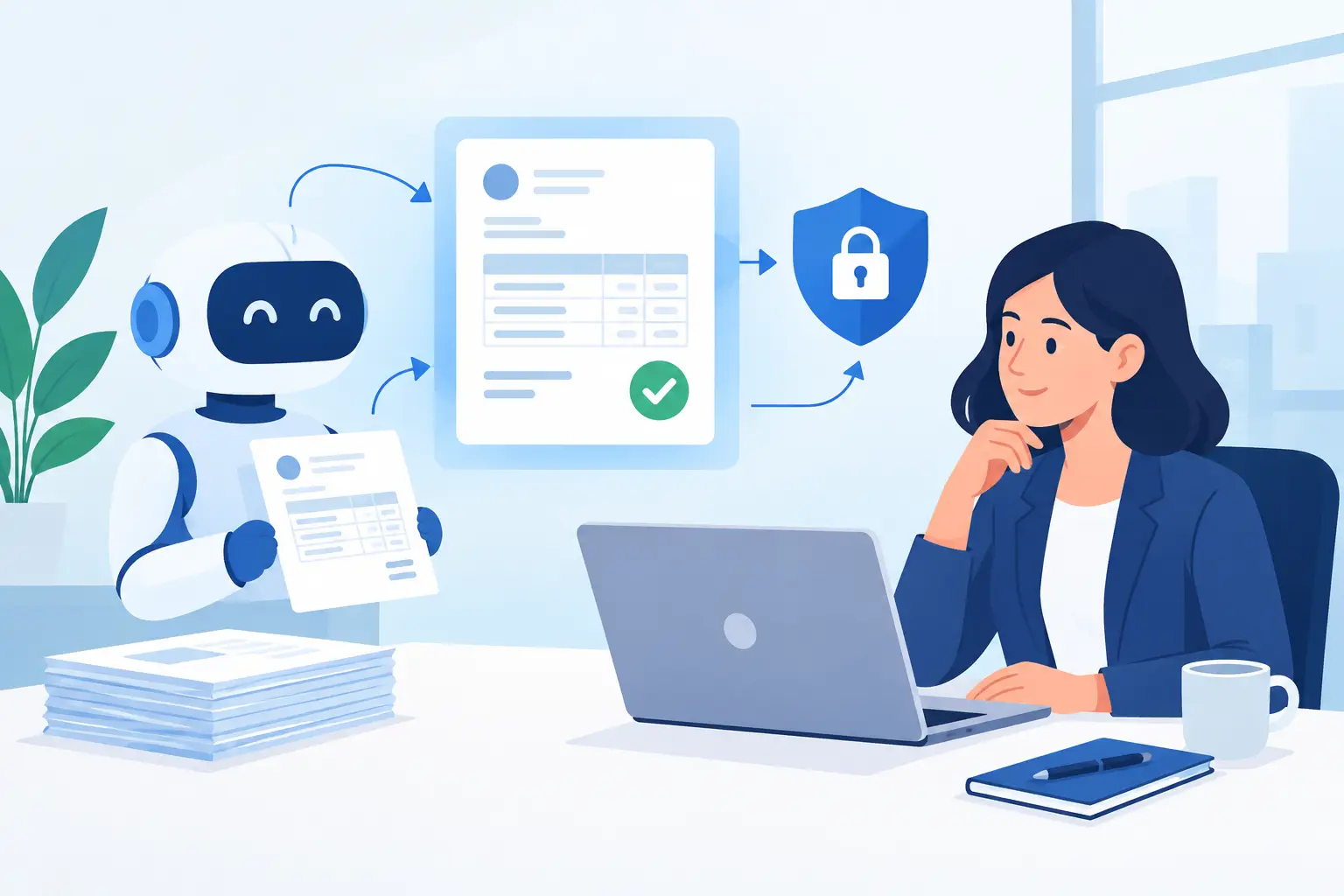
AI can support much of the accounts payable workflow. It can read invoices received by email or uploaded to a portal, extract details such as supplier name, invoice number, date, GST, payment terms and line items, then enter that information into the right finance system. Modern tools can also learn from previous coding choices, suggesting the correct account, cost centre or location for recurring suppliers.
The practical value is not simply faster data entry. When invoices are captured consistently, finance teams can see what is waiting for approval, what is due soon and what has been queried. That makes it easier to avoid late fees, take advantage of early-payment terms where they make commercial sense, and forecast cash requirements with greater confidence.
For multi-site businesses, automation can be particularly useful. A retailer with several locations may receive utility bills, stock invoices, maintenance charges and payment-terminal costs at different branches. AI can classify documents and route each item to the local manager or central finance team based on agreed rules. The invoice does not sit in an inbox simply because nobody knows who owns it.
Where AI Delivers the Most Value
The strongest use cases tend to be high-volume, repeatable invoices from known suppliers. If the same wholesaler submits a similar invoice each week, AI can recognise the layout, check expected fields and propose the usual coding. It can also match an invoice to a purchase order and goods receipt, where those records are available.
AI is also useful for finding inconsistencies that are easy to miss when people are rushed. It can highlight a duplicate invoice number, a changed bank account, an amount that is unusually high for that supplier, or a price that differs from the purchase order. These checks are not a replacement for financial controls, but they create an earlier warning point.
The outcome is a calmer process. Instead of spending hours rekeying data and chasing routine approvals, staff can deal with exceptions: a disputed delivery, a new supplier, a missing purchase order or a cost that needs a manager’s judgement. Technology should make life easier, not remove the visibility needed to run the business responsibly.
AI is not the same as unattended payment
There is an important distinction between automating invoice processing and automating payment release. A system may be trusted to capture invoice details and recommend coding, but payment authority should remain governed by clear limits and separation of duties.
For example, one person may create or amend supplier details, another may approve an invoice, and a different authorised person may release a payment. Larger payments, new bank details or unusual transactions may require a second approval. These controls matter whether invoices are handled manually or with AI. Automation should enforce them consistently, not bypass them for convenience.
What Still Needs Human Judgement
AI works from patterns, rules and the information it receives. It cannot reliably know whether a service was delivered to the expected standard, whether a supplier relationship is deteriorating, or whether a one-off charge is commercially justified. Those are business decisions.
A person should review invoices that fall outside normal patterns. This includes a new supplier, unexpected freight costs, invoices without a matching order, changes to bank account details, unclear tax treatment and contracts with variable charges. The goal is not to have people inspect every field on every familiar invoice. It is to direct their attention to the items that carry greater financial or operational risk.
We've got your back
Human oversight also matters when the underlying data is poor. If purchase orders are raised inconsistently, supplier records contain duplicates or site managers use different naming conventions, AI will inherit that disorder. Cleaning up supplier information and setting practical purchasing rules is often the first step towards dependable automation.
Security Must Be Built Into the Workflow
Invoice fraud is a real concern for operationally busy businesses. Criminals can impersonate a supplier, alter bank details on a genuine-looking invoice, or use a compromised email account to request urgent payment. An AI tool may help identify unusual details, but it should be one layer in a broader security approach.
Protect the systems involved in invoice handling with multi-factor authentication, role-based access and strong password management. Keep finance software, email services and devices patched. Limit who can amend supplier bank details, and require independent verification using a known contact method before any change is accepted. Do not rely on a phone number shown in a suspicious email or invoice.
The process also needs reliable connectivity and backup. If the finance platform, shared inbox or payment system is unavailable, work quickly reverts to ad hoc spreadsheets and emailed attachments. That creates gaps in the audit trail and makes it harder to see who approved what. Managed IT, cybersecurity and connectivity work best when they are planned together, because the invoice workflow depends on all three.
How to Introduce AI Invoice Automation Safely
Start with a narrow, measurable part of the process rather than attempting to automate every invoice on day one. Choose a handful of regular suppliers or one invoice category with a clear approval path. Measure the current time spent entering data, resolving queries and chasing approvals. That gives you a realistic baseline for improvement.
Next, document the rules before configuring technology. Decide who approves invoices by value, location and cost category; what must be matched before approval; and what exceptions require a second review. If these decisions are vague, an AI implementation will only make an unclear process move faster.
Test the system against real invoices and compare its extracted data and coding suggestions with the finance team’s decisions. Review confidence scores and exception handling carefully. In the early stages, staff should validate more outputs. As accuracy becomes proven for familiar suppliers and formats, routine work can be processed with less intervention.
Training is equally important. Managers need to understand that approving an invoice is an accountability step, not a button to clear notifications. Finance staff need a straightforward route to correct AI suggestions and report recurring problems. The people using the system should know how to recognise suspicious invoices and what to do when something does not add up.
A single accountable technology partner can make this easier to manage. Vetta can help businesses connect automation with the underlying IT, security and support needed to keep the process available and protected, rather than leaving finance teams to coordinate several providers when an issue crosses system boundaries.
The Right Measure of Success
Success is not measured by how few people touch an invoice. It is measured by whether invoices are processed accurately, approved on time, protected from fraud and easy to trace when questions arise. Some businesses will automate nearly all of their routine supplier invoices. Others will need more review because of complex projects, irregular purchases or decentralised operations. It depends on the quality of the data, the maturity of the purchasing process and the level of risk the business is prepared to accept.
The sensible next move is to identify where invoices stall today, then automate that bottleneck without weakening the controls around payment. When the workflow is built around clear ownership, secure access and useful exceptions, AI becomes a practical assistant to your finance team – not another system they have to chase.





