







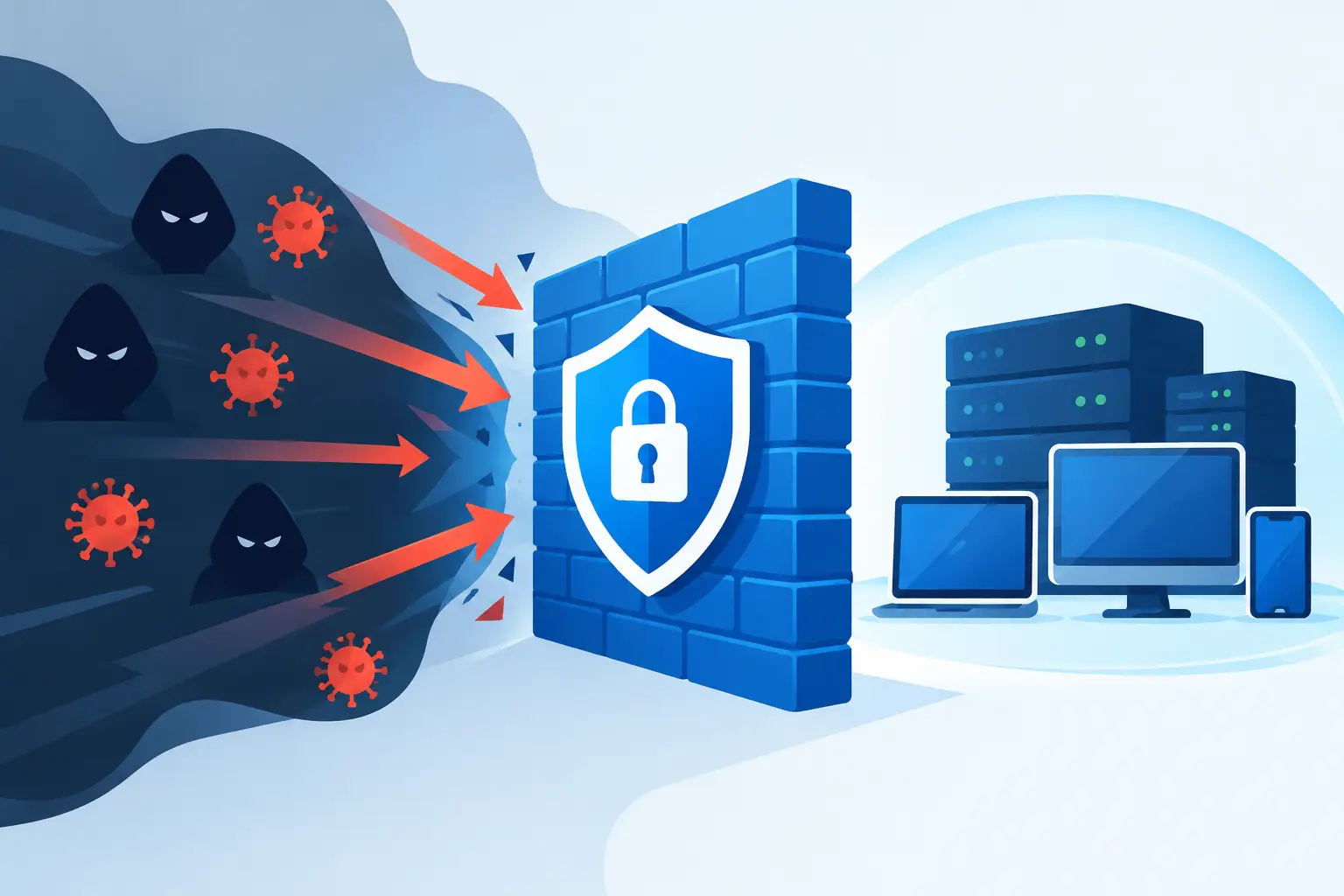
A breach rarely starts with a dramatic Hollywood-style hack. More often, it begins with an unpatched remote access tool, a staff member clicking a convincing email, or an internet-facing system that nobody realised was exposed. So, can managed firewalls prevent breaches? They can prevent many of the common paths attackers use – but only when they are properly configured, monitored and backed by a wider security plan.
For busy businesses, the practical question is not whether a firewall makes security perfect. Nothing does. The question is whether it reduces the chance that a small mistake becomes an expensive outage, data loss event or payment security incident. A managed firewall is one of the strongest controls for doing exactly that.
Can managed firewalls prevent breaches in practice?
A firewall sits between your business network and the internet. It checks traffic entering and leaving the network against rules designed to allow legitimate activity and block suspicious or unauthorised connections. A managed firewall adds people, monitoring and ongoing maintenance to that technology.
This distinction matters. A firewall installed once and left untouched can quickly fall behind the business it is meant to protect. New cloud applications, staff working remotely, a new site, replacement EFTPOS equipment or a supplier needing temporary access can all change the network’s risk profile. Without active oversight, rules can become too broad, outdated or simply forgotten.
Managed firewalls can help stop breaches by blocking known malicious traffic, restricting access to sensitive systems, identifying unusual connection attempts and preventing staff devices from communicating with harmful destinations. Many services also include intrusion prevention, web filtering, application control and threat intelligence that is updated as new risks emerge.
However, the word “prevent” needs care. A firewall cannot reliably stop an employee from entering credentials into a fake sign-in page, nor can it fix weak passwords, unsecured cloud settings or an unpatched laptop operating away from the office. It is a critical security layer, not a complete security programme.
What a managed firewall is designed to stop
The most immediate value is reducing unnecessary exposure. Every open service, broad access rule or unmonitored connection gives an attacker another opportunity to probe your systems. A well-managed firewall applies the principle of least privilege: only the traffic and access your business genuinely needs should be allowed.
For a retailer, that may mean separating payment terminals from guest WiFi and staff devices. For a multi-site operator, it can mean securely connecting branches without making each location visible to the public internet. For a business with remote staff, it may mean enforcing secure access to applications rather than allowing unrestricted entry to the entire network.
A managed service also helps protect against attacks that develop outside office hours. Automated attacks do not wait for Monday morning. They scan for exposed services, attempt stolen passwords and test known vulnerabilities continuously. Around-the-clock monitoring gives suspicious activity a better chance of being spotted, investigated and contained before it spreads.
That operational response is as important as the firewall itself. A security alert is useful only when someone understands whether it is harmless background noise, a configuration issue or an active threat requiring action. Businesses without a dedicated internal security team often struggle here. Alerts build up, updates are delayed and important warnings are missed among routine notifications.
Why management matters as much as the appliance
Buying an advanced firewall does not automatically create a secure network. The technology must be configured for the environment, kept current and reviewed as the business changes. This is where managed firewalls earn their place.
A provider should begin by understanding how the organisation operates: which sites need to connect, where card payments are processed, which applications are essential, who needs remote access and what must remain available if an internet connection fails. That understanding enables sensible network segmentation and access policies without creating unnecessary friction for staff.
We've got your back
Ongoing management should include firmware updates, security signature updates, configuration reviews and alert monitoring. It should also include a clear escalation process. If a suspected attack affects connectivity at a branch, the response should not involve the customer being passed from their internet provider to an IT company and then to a security vendor. One accountable partner can investigate across the connection, network equipment and security controls.
For organisations using cloud services, this joined-up approach is particularly valuable. Traffic no longer stays neatly inside an office. Staff access software from home, suppliers connect remotely and business data moves between devices, cloud platforms and sites. Firewall policies need to reflect that reality without making everyday work harder than it needs to be.
The breach risks a firewall cannot solve alone
Managed firewalls are highly effective at controlling network traffic, but attackers also target people, identities and data. A realistic security plan addresses all three.
Phishing remains a leading cause of compromise because it exploits trust rather than a technical weakness. If a team member receives a convincing invoice email and signs into a fake Microsoft 365 page, an attacker may gain valid credentials without needing to breach the firewall at all. Email security, multi-factor authentication, password management and awareness training are essential companions.
Likewise, a firewall cannot restore files encrypted by ransomware or recover data deleted by mistake. Tested cloud backup and a documented recovery plan protect business continuity when prevention measures do not succeed. Penetration testing can also reveal weaknesses that standard monitoring may not uncover, such as an insecure web application or excessive permissions.
There are trade-offs to consider. Very restrictive policies can interfere with legitimate software, supplier access or staff productivity. Overly permissive policies are easier in the short term but increase risk. The right balance depends on the organisation, its data, its compliance obligations and how much downtime it can tolerate. Good management is not about blocking everything. It is about allowing the right activity while making unauthorised activity difficult.
How to assess a managed firewall service
When comparing providers, look beyond the model of firewall being supplied. The service wrapping around it determines whether it will deliver meaningful protection.
Ask who watches alerts, when they watch them and what happens when something suspicious is found. Confirm whether monitoring is genuinely 24/7 or only during business hours. Understand who is responsible for updates, policy changes and incident response, and how quickly you can reach a person who can act.
It is also worth asking how the firewall will work with your connectivity, WiFi, endpoints, cloud systems and payment environment. Fragmented suppliers can create delays during an incident, especially where the fault could sit anywhere between the internet connection, local network and security configuration. A single partner model reduces hand-offs and makes accountability clearer.
Vetta Group brings connectivity, managed IT and security together so businesses have one team responsible for keeping critical systems connected, protected and supported. That matters most when an issue needs urgent attention, not another support ticket.
Turning firewall protection into business resilience
The best firewall strategy starts with the systems that matter most. Identify where customer information, payment data and critical operational systems sit. Separate those systems from guest networks and general browsing where possible. Review who has remote access, remove accounts that are no longer needed and ensure changes to sites or software are reflected in the firewall policy.
Then treat security as an ongoing service rather than a one-off installation. Threats change, staff roles change and businesses add new tools. Regular reviews keep protection aligned with the way the organisation actually works.
A managed firewall will not promise that a breach can never happen. What it can do is make common attacks harder to execute, limit an attacker’s movement if they gain access and provide the visibility needed to respond quickly. For an operationally busy business, that is the difference between hoping technology holds up and knowing someone is actively looking after it.





